Achieve natural, long-lasting facial rejuvenation with Turkey’s leading plastic surgeons, who combine artistic expertise with advanced techniques at a fraction of Western prices.
A facelift is not a small decision. You’re choosing to have someone restructure the tissue under your skin, reposition muscles, and remove what your body no longer needs. Do that well, and you look like yourself again – just rested, just younger. Do that badly, and you carry the evidence on your face every day.
At Santé, we coordinate facelift procedures in Istanbul for women (and some men) coming from the UK, Germany, and across Europe. We don’t operate. We don’t pretend to be surgeons. What we do is find the right surgeon for your specific face, manage every detail of your trip, and stay involved long after you fly home.
Here’s what you actually need to know – the pricing, the process, the risks, and the things other clinic websites skip over.
How Much Does a Facelift Cost in Turkey in 2026?
A full facelift (SMAS technique, neck included) in Turkey costs approx. €3,500. A mini facelift is quoted after consultation.
| Procedure | Turkey | UK | Germany | USA |
|---|---|---|---|---|
| Full facelift (SMAS) | approx. €3,500 | £8,000 – £15,000 | €7,000 – €14,000 | $10,000 – $20,000 |
| Mini facelift | Quoted after consultation | £5,000 – £9,000 | €4,000 – €8,000 | $7,000 – $14,000 |
| Deep plane facelift | Quoted after consultation | £12,000 – £20,000 | €9,000 – €16,000 | $15,000 – $25,000 |
The price difference is significant, but it doesn’t come from corner-cutting. Turkey’s operating costs, hospital fees, and staff salaries are lower. Turkish plastic surgeons also perform a high volume of facelifts – ISAPS global survey data consistently places Turkey among the top countries for aesthetic procedures.
What’s included in a Santé facelift package:
- Board-certified plastic surgeon
- Hospital stay (1 night)
- Hotel accommodation (5–7 nights)
- Airport transfers
- All medications and anaesthesia
- Post-operative care and check-ups
- Compression garment
- 3 follow-up video consultations after you return home
What’s not included: flights and personal spending.
From our founder: “I lived in Turkey for 5 years. I’ve watched this industry from the inside. Some clinics pack surgeons with back-to-back cases. A surgeon doing 5 or 6 facelifts in a day is rushing. Our surgeons take one, sometimes two facelift cases per day. Your face gets the time it needs.”
What Types of Facelift Surgery Are Available?
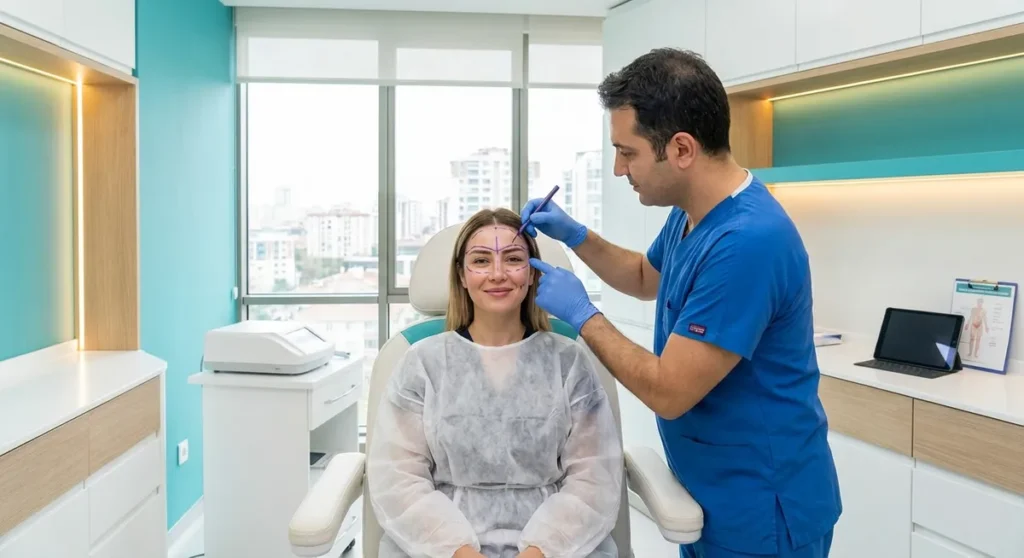
Four main facelift techniques exist, and the right one depends on your age, skin quality, how much sagging you have, and what you want to achieve.
SMAS facelift – the most common full facelift. The surgeon tightens and repositions the muscle layer beneath your skin, then removes excess skin. Results typically last 7 to 10 years.
Deep plane facelift – the surgeon releases the ligaments holding facial tissue in place and repositions everything as a single unit. Less tension on the skin means more natural movement and longer-lasting results.
Mini facelift – shorter incisions, less tissue manipulation, faster recovery. Good for patients in their 40s or early 50s with mild to moderate sagging.
Mid-face lift – focuses on the cheek area specifically. Lifts descended fat pads that create hollowing under the eyes and deepening nasolabial folds.
The technique matters less than the surgeon performing it. We help you understand the trade-offs during your Facial & Body Analysis consultation.
What Does the Surgery and Recovery Process Look Like?
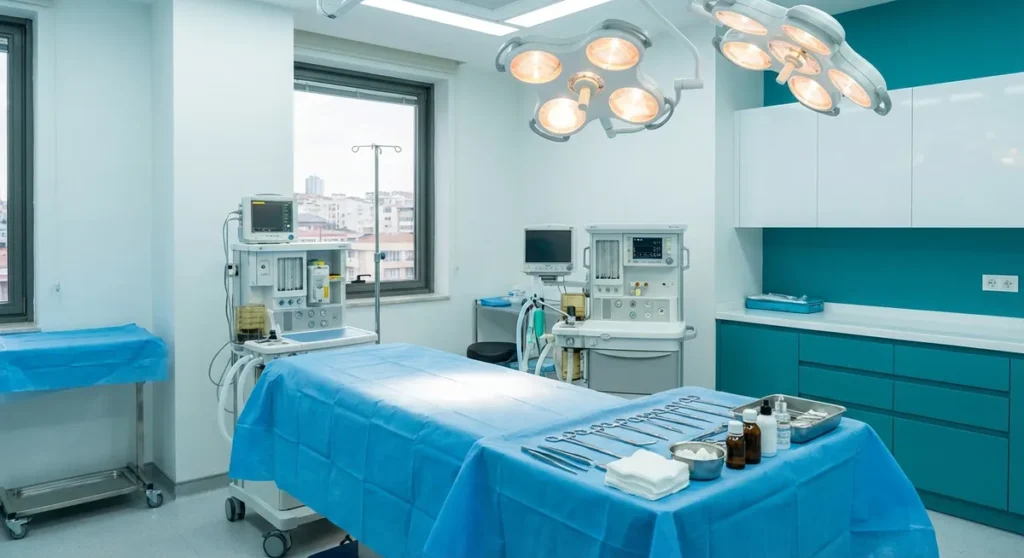
The procedure takes 3 to 5 hours under general anaesthesia, with one night in hospital.
Here’s an honest timeline:
- Day 1–3: Significant swelling and bruising. Your face feels tight. Drains may be placed.
- Day 5–7: Drain removal, initial suture removal. You’ll look worse before you look better.
- Week 2–3: The worst of the bruising fades. Light activity.
- Month 1–2: About 70% of swelling resolves. You start seeing the shape your surgeon created.
- Month 3–6: Final results settle in. Scars continue fading.
About scarring. A well-performed facelift leaves incisions hidden in the hairline, in front of and behind the ear, and sometimes under the chin (if combined with a neck lift). After 6 to 12 months, these scars are difficult to spot even up close.
Days 5 through 14 can be psychologically rough. The swelling is uneven. One side heals faster than the other. You might question your decision. This is completely normal, and it passes.
How Do We Choose Your Surgeon?
Your surgeon is the single most important factor in your facelift outcome.
We partner with board-certified plastic surgeons in JCI-accredited hospitals across Istanbul’s Sisli and Besiktas districts.
From our founder: “My partner is at every appointment – pre-op consultation, surgery day, post-op checks. She confirms that the surgeon you were promised is the surgeon who operates. Doctors in Istanbul often work in 3 or 4 different clinics. My partner handles this personally. She’s there. She translates. She confirms.”
We work with a small number of specialists whose work we’ve observed over years. Some are stronger with SMAS technique. Others have trained specifically in deep plane procedures. We match based on your case, not on who happens to be available that week.
Before surgery, you’ll have a detailed consultation – often starting with our Facial & Body Analysis – where the surgeon examines your facial structure, skin elasticity, and bone positioning.
Is Facelift Surgery in Turkey Safe?
Yes, when performed by a board-certified surgeon in a JCI-accredited hospital with proper pre-operative screening.
But let’s talk about what makes it unsafe. Turkey has thousands of clinics. Not all are equal.
Who should NOT get a facelift in Turkey (or anywhere):
- Heavy smokers who can’t quit for at least 4 weeks before and after surgery
- Patients with uncontrolled diabetes, hypertension, or blood clotting disorders
- Anyone with unrealistic expectations
- People choosing a clinic based purely on the lowest price
We screen every patient before accepting their case.
How Long Do Results Last?
A well-performed SMAS facelift typically lasts 7 to 10 years. Deep plane facelifts can last somewhat longer. Mini facelifts – around 5 to 7 years. A 2019 study in JAMA Facial Plastic Surgery found that deep plane facelift patients maintained significant improvement at long-term follow-up.
You don’t suddenly look old again after 7 years. Your face continues aging from its new starting point.
What affects how long your results hold:
- Sun exposure. UV damage breaks down collagen.
- Smoking. Degrades skin quality and accelerates ageing.
- Weight fluctuations.
- Skincare. Retinoids, vitamin C serums, and professional treatments (like those offered through our Skin Rejuvenation services).
- Genetics.
What Can Go Wrong – and How Do We Handle It?
Every surgery carries risk. Anyone who tells you a facelift is risk-free is either lying or uninformed.
Common issues:
- Temporary numbness around the ears and lower face. Resolves in weeks to months.
- Asymmetric swelling.
- Hematoma (1 to 3% of cases). Requires prompt drainage.
Rare but serious:
- Nerve injury affecting facial movement. Temporary weakness typically resolves within weeks.
- Skin necrosis from compromised blood supply. Almost always linked to smoking.
From our founder: “We include 3 follow-up video consultations after your return. You get direct contact with your surgical team. And if something genuinely requires in-person attention, we coordinate that – whether it means a local referral or arranging your return to Istanbul. You’re not abandoned after checkout.”
What Real Patients Ask Us (FAQ)
Can I combine a facelift with other procedures? Yes. A facelift combined with a neck lift, forehead lift, or eyelid surgery is common. One anaesthesia session, one recovery, one trip.
Where are the incisions? Will people see my scars? Incisions follow the hairline, in front of and behind the ear. In skilled hands, these heal to thin lines that are nearly invisible within months.
What’s the difference between a facelift and fillers? Fillers add volume. A facelift repositions tissue. They address different problems. Some patients benefit from both.
How soon can I fly after a facelift? We recommend staying 7 to 10 days. Most patients can fly comfortably after day 7.
Am I too old for a facelift? Age alone doesn’t disqualify you. General health matters more. We’ve coordinated facelifts for patients in their early 70s.
Will I look “done” or “pulled”? Not if your surgeon is good. Modern SMAS and deep plane techniques reposition tissue at a deeper level, which creates natural movement.
What about men? Facelift surgery works for men too. The approach differs slightly – beard patterns, thicker skin, and masculine facial contours require specific consideration.
Ready to Get a Real Quote?
Skip the generic pricing calculators. Send us photos and a brief description of what bothers you about your face. We’ll review your case, match you with the right surgeon, and send you a detailed proposal.
Start with a free Facial & Body Analysis or get in touch directly:
WhatsApp: +90 546 229 38 34
Or visit our contact page to send photos and details.
You can also check our Prices page for a general overview.
FAQ
Can't find what you're looking for?
Contact us
or message us
Quick answers to questions
you may have
Your Most Important Questions, Answered
How long do facelift results really last?
Well-performed SMAS or deep plane facelifts typically last 10-15 years, though you continue aging from your new starting point. Mini facelifts last 5-7 years. Factors include surgical technique, skin quality, genetics, and lifestyle (especially sun exposure and smoking). You’ll always look younger than if you hadn’t had surgery. Skin rejuvenation treatments help maintain results.
Will people know I've had a facelift?
Not if done well. Modern techniques avoid the windswept look of old-fashioned facelifts. Incisions hide in natural creases and heal nearly invisible. The goal is looking refreshed and rested, not operated. Most patients report friends asking about weight loss, new hairstyle, or vacation – not surgery. Combining with subtle dental work enhances overall transformation naturally.
What's the ideal age for a facelift?
No perfect age – depends on anatomy and aging pattern. Most patients are 45-70, but some benefit earlier or later. Key is having enough laxity to warrant surgery but good elasticity for optimal results. Mini facelifts work well for 40s-50s, full facelifts for 50s-60s. Facial analysis helps determine optimal timing.
Can I combine a facelift with other procedures?
Yes, combining procedures is common and advantageous. Popular combinations include neck lift, forehead lift, cat eye surgery, and eyelid surgery. Non-surgical additions like skin rejuvenation enhance results. Many patients also coordinate dental work or hair restoration during their stay.
How painful is facelift recovery?
Most report minimal pain – more tightness and discomfort than actual pain. Pain peaks days 2-3, well-controlled with medication. By day 5, most need only over-the-counter painkillers. The challenging part is usually swelling/bruising appearance, not pain. Patients consistently say it was easier than expected.
Can men have facelifts in Turkey?
Absolutely. Male facelifts require special consideration for beard patterns, thicker skin, and masculine goals. Turkish surgeons see many male patients, understanding unique requirements. Incisions preserve sideburns and beard growth. Results look natural and masculine. Many men combine with hair transplantation for complete rejuvenation.
What if I need a revision?
Reputable Turkish surgeons offer revision policies, typically covering surgical fees for complications within first year. Minor revisions for asymmetry often done under local anesthesia. Long-term touch-ups (5-10 years) at reduced rates for returning patients. Choosing experienced surgeons minimizes revision risk significantly.
Why our prices say «from»
Every figure on this page is a starting price for one confirmed, specific option — not an average and not a package. What changes the final number:
- the area treated and the volume of work
- the technique the surgeon chooses after seeing your case
- whether the procedure is combined with another one in the same session
- implants or materials, where the case needs them
The final amount is confirmed by the doctor after a panoramic X-ray or an in-person assessment — until then any figure, including ours, is an estimate. We quote from a single confirmed price list, so the number you hear on WhatsApp is the same one you see here. If you are already in Istanbul, the consultation and the X-ray are free.