Teeth whitening in Turkey from €400. Laser, Zoom, home kits. Real prices March 2026. Combine with veneers or implants during the same trip. Santé.
Written by
Alisher Khakimov
Reviewed by
Alisher Khakimov
- 4 min read
How Much Does Teeth Whitening Cost in Turkey in 2026?
Professional teeth whitening in Istanbul costs from €400 per session as of March 2026, compared to €500–1,200 in the UK and $500–1,000 in the USA. The procedure takes 45–90 minutes and results are visible immediately – typically 5–8 shades lighter in a single session.
Let me be honest upfront: teeth whitening alone probably isn’t worth flying to Istanbul for. The savings on a single whitening session are €100–800. Once you add flights and hotel, the math doesn’t work.
But here’s where it makes sense. Most of our whitening patients aren’t coming just for whitening. They’re combining it with dental implants, veneers, or other dental work during the same trip. In that scenario, adding whitening needs no separate trip – you’re already in the chair.
| Method | Turkey (2026) | UK | Germany | USA |
|---|---|---|---|---|
| Laser Whitening (1 session) | from €400 | €500–800 | €400–700 | $500–800 |
| Zoom Whitening | from €400 | €600–1,200 | €500–900 | $600–1,000 |
| Professional Home Kit (custom trays) | Quoted after your X-ray | €300–500 | €250–400 | $300–500 |
What Whitening Methods Are Available?
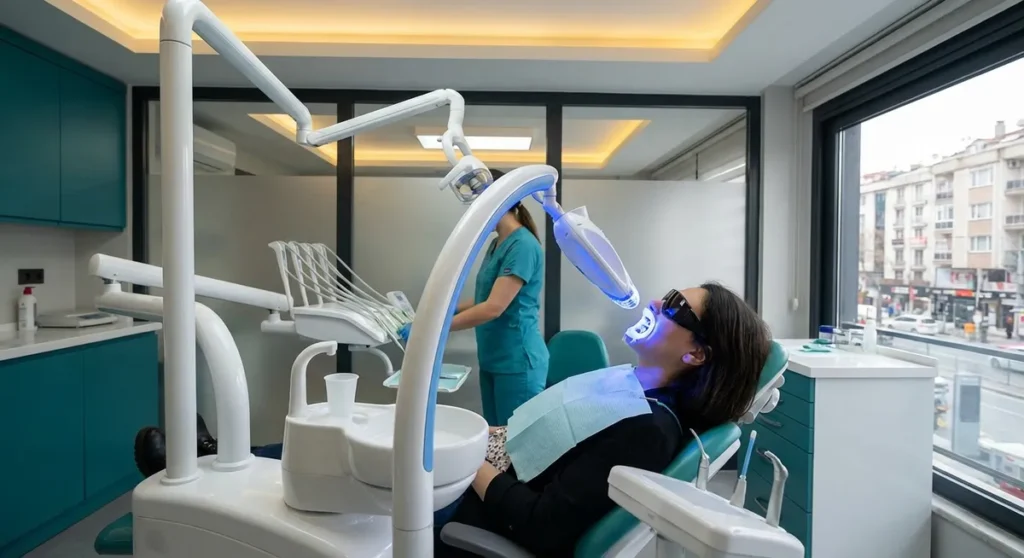
Three main professional whitening methods are offered at our partner clinics in Istanbul. Each works differently, and the best choice depends on your teeth, sensitivity level, and how much time you have.
In-office laser whitening. The fastest option. A high-concentration hydrogen peroxide gel is applied to your teeth, then activated with a laser or LED light. Takes 45–60 minutes. Results: 5–8 shades lighter. This is what most of our patients choose because it fits into a busy treatment schedule.
Zoom whitening. Uses a specific Philips Zoom lamp with a slightly different activation process. Takes about 90 minutes (three 15-minute sessions back to back). Results are similar to laser whitening. Some dentists prefer Zoom for patients with moderate sensitivity because the formula includes desensitizing agents.
Professional home whitening kits. Custom trays made from impressions of your teeth, with professional-grade gel (10–16% carbamide peroxide). You wear them 1–2 hours daily for 2 weeks. Results are gradual but long-lasting. Good for patients who want to maintain results after an in-office session.
And then there’s over-the-counter strips and pens. I won’t tell you they don’t work at all – they do lighten teeth slightly. But the concentration is much lower, the application is uneven, and the results last weeks, not months. If you’re going to whiten, do it properly.
How Long Do Whitening Results Last?
Professional whitening results typically last 6–18 months depending on your habits. Coffee, tea, red wine, and smoking are the main culprits. Some patients maintain results for 2+ years with good oral hygiene and occasional touch-up trays.
This is where expectations matter. Whitening isn’t permanent. Your teeth will gradually return toward their natural shade. A professional home kit extends the life of in-office results significantly – most of our partner dentists include one in the package.
What affects how long results hold: – Coffee and tea consumption (biggest factor) – Smoking (stains return faster) – Red wine, berries, curry, soy sauce – Oral hygiene routine – Whether you use a maintenance kit
One thing I’ve learned working with our dental team in Istanbul: patients who follow the “white diet” for 48 hours after treatment (no colored foods or drinks) get noticeably better, longer-lasting results. It sounds excessive, but it genuinely makes a difference.
Is Teeth Whitening Safe?
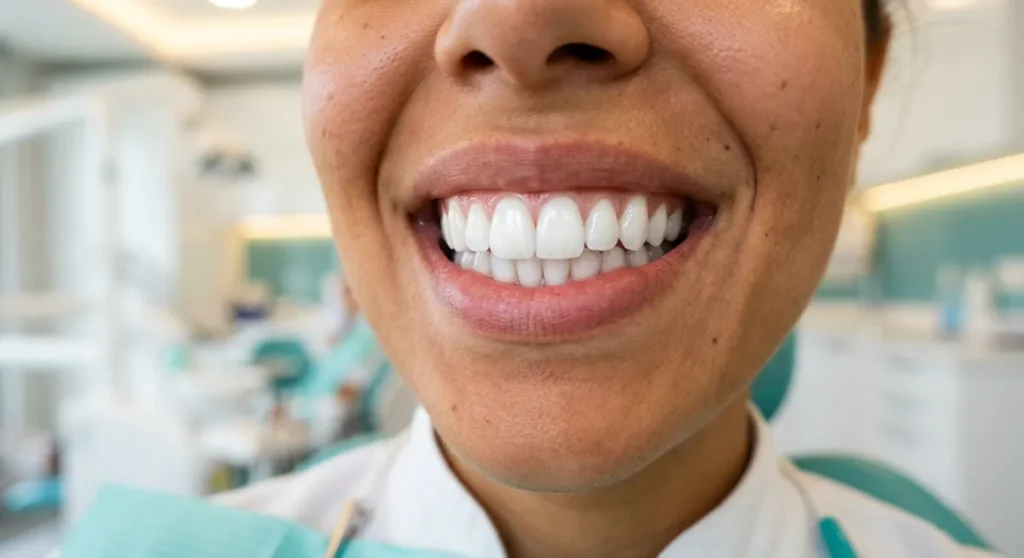
Professional whitening supervised by a dentist is safe for healthy teeth and gums. The American Dental Association confirms that hydrogen peroxide and carbamide peroxide whitening products, when used as directed, do not damage tooth enamel.
The main side effect is temporary sensitivity. Most patients experience mild to moderate sensitivity for 24–48 hours after treatment. It resolves on its own. Desensitizing toothpaste (Sensodyne or similar) for a week before and after treatment reduces this significantly.
Who should NOT whiten their teeth: – Patients with untreated cavities or active gum disease (fix these first) – Anyone with exposed root surfaces or significant enamel erosion – Pregnant or breastfeeding women (precautionary, not proven harmful) – Patients with extremely dark tetracycline staining (whitening alone won’t be enough – veneers are a better option)
Your dentist in Istanbul will examine your teeth before whitening and flag any issues. If cavities or gum problems exist, those get treated first.
Can I Combine Whitening with Other Dental Work?
Yes, and this is where whitening in Istanbul actually makes financial sense. The most common combinations we arrange:
Whitening + veneers. If you’re getting veneers on your front teeth, we whiten your remaining teeth first. The veneer shade is then matched to your newly whitened teeth. This gives you a consistent, bright smile across all teeth. Without whitening first, your veneers either match your current shade (too dark) or stand out against darker surrounding teeth.
Whitening + dental implants. The implant crown shade is chosen to match your other teeth. If you plan to whiten, do it before the crown is made. Crowns and implant caps don’t respond to whitening gel.
Whitening + general dental work. Many patients coming for fillings, crowns, or oral hygiene treatment add whitening at the end of their visit. Since you’re already in the dental chair and your teeth are freshly cleaned, it’s the ideal time.
My partner coordinates the scheduling so whitening happens on the right day relative to your other procedures. Timing matters – you don’t want whitening gel on freshly bonded surfaces.
What Does the Whitening Process Look Like?
The whole thing takes about an hour for in-office treatment. No anesthesia, no needles, no downtime. You walk in with stained teeth and leave with a visibly brighter smile.
Step 1 – Cleaning. Your teeth are professionally cleaned to remove plaque and surface stains. This alone makes a noticeable difference.
Step 2 – Protection. Your gums are covered with a protective barrier (rubber dam or resin shield) to prevent gel contact with soft tissue.
Step 3 – Gel application. Hydrogen peroxide gel (25–40% concentration for in-office, depending on the system) is applied evenly to the front surfaces of your teeth.
Step 4 – Light activation. Laser or LED light activates the gel for 15–20 minutes. This is repeated 2–3 times. You sit back and relax. Some patients watch Netflix on their phone.
Step 5 – Rinse and assess. The gel is removed, shade is compared to the starting point. Most patients see 5–8 shade improvement.
Total time in the chair: 45–90 minutes depending on the method. You can eat soft, non-staining food immediately. Follow the “white diet” for 48 hours for best results.
What Real Patients Ask Us (FAQ)
“Does whitening damage enamel?” No. Professional whitening with proper concentrations does not damage tooth enamel. The peroxide penetrates enamel to break down stain molecules in the dentin layer underneath. Your enamel structure remains intact.
“How many shades lighter will I get?” Typically 5–8 shades with professional in-office treatment. Results depend on your starting shade, the type of staining, and your tooth composition. Yellow-toned stains respond best. Grey-toned stains (from tetracycline antibiotics) are harder to treat.
“Is it painful?” Not during the procedure. Some patients feel a brief “zinging” sensation. Post-treatment sensitivity is common but mild and temporary (24–48 hours). If you have sensitive teeth normally, tell your dentist – they’ll use a lower concentration or add desensitizing agents.
“Can I whiten crowns, veneers, or fillings?” No. Whitening only works on natural tooth structure. Existing restorations won’t change color. This is why we always recommend whitening before getting new restorations – so the shade can be matched to your brighter teeth.
“How often can I whiten?” Professional in-office whitening: once every 12–18 months. More frequent treatments can increase sensitivity without significant additional benefit. Touch-up with home trays every 3–6 months is safe and effective.
Ready to Get a Real Quote?
If you’re planning dental work in Istanbul and want to add whitening, send us a message. We’ll include it in your treatment plan at the right point in the schedule.
For whitening as a standalone treatment, we’re honest: fly to Istanbul only if you’re combining it with other dental work or already visiting for another procedure.
WhatsApp: +90 546 229 38 34
Or fill out the contact form and we’ll reply within 24 hours.
FAQ
Can't find what you're looking for?
Contact us
or message us
Quick answers to questions
you may have
Your Most Important Questions, Answered
Is teeth whitening in Turkey safe?
Absolutely. Turkish dental clinics follow strict EU health and safety standards. All whitening products are CE-certified and identical to those used in Western clinics. Our partner dentists are internationally trained with extensive experience treating foreign patients. The Ministry of Health regulates all dental practices, ensuring the highest standards of hygiene and safety.
How white will my teeth actually get?
Most patients achieve 5-8 shades improvement with professional laser or Zoom whitening. Results depend on your starting shade, type of staining, and chosen treatment. Your teeth return to their optimal natural shade, not unnaturally white. During consultation, your dentist shows realistic before/after examples of similar cases to set appropriate expectations.
Will whitening damage my teeth?
Professional whitening, when properly performed, doesn’t damage tooth enamel. Studies show no structural changes to teeth from professional whitening. The temporary sensitivity some experience is from dehydration of teeth, not damage. Turkish dentists use protocols that minimize any discomfort while maximizing results safely.
Can I whiten teeth with dental work?
Natural teeth whiten, but crowns, veneers, fillings, and bridges won’t change color. If you have visible restorations, discuss options with your dentist. Sometimes old fillings can be replaced after whitening to match your new shade. Planning the sequence with aesthetic dentistry work is crucial for optimal results.
How long should I wait between whitening treatments?
Professional whitening can be safely repeated every 6-12 months if needed. Most patients find annual touch-ups sufficient with good maintenance. Home tray touch-ups can be done more frequently. Your dentist will recommend an appropriate schedule based on your results and lifestyle factors.
What if I'm not happy with the results?
While rare with professional whitening, our partner clinics offer solutions if you don’t achieve desired results. This might include additional treatment sessions or alternative approaches. Having realistic expectations through proper consultation prevents disappointment. Each case is unique, and your dentist will be honest about achievable outcomes.
Can I whiten my teeth if I'm getting other dental work?
Yes, but sequence matters. Always whiten before getting veneers, crowns, or bonding so restorations can be matched to your whitened shade. If getting orthodontic treatment, whiten after completion. Your dentist will create the optimal treatment timeline for complete smile transformation.
Why our prices say «from»
Every figure on this page is a starting price for one confirmed, specific option — not an average and not a package. What changes the final number:
- the brand and material you choose — an implant starts at €280 (Swiss) and reaches €800 (Straumann); a veneer is €120 in composite and €240 in E.max
- how many teeth are treated
- whether the bone needs preparation — grafting (€120 per 1cc) or a sinus lift (€150–250)
- the condition of the gums — periodontal treatment before implants is quoted separately
- whether anything has to be treated or removed first — root canals, fillings, extractions
The final amount is confirmed by the doctor after a panoramic X-ray or an in-person assessment — until then any figure, including ours, is an estimate. We quote from a single confirmed price list, so the number you hear on WhatsApp is the same one you see here. If you are already in Istanbul, the consultation and the X-ray are free.