
Hair PRP Therapy in Turkey: Prices, How It Works, and What Nobody Tells You (2026)
Hair PRP therapy in Turkey from €150 per session. Platelet-rich plasma for hair loss. Real prices March 2026. Combine with FUE transplant. Sante Clinic.
Table of Contents
Get free quote
How Much Does Hair PRP Cost in Turkey in 2026?
A single PRP (platelet-rich plasma) session for hair loss in Istanbul costs €150–300 as of March 2026, compared to €400–800 in the UK and $500–1,000 in the USA. A standard course of 3 sessions runs €400–800 in Turkey versus €1,200–2,400 in London.
PRP is one of those treatments where the savings for a single session aren’t enough to justify international travel. Most of our PRP patients are either combining it with a FUE hair transplant (PRP during transplant improves graft survival) or adding it to another dental or cosmetic procedure during the same Istanbul trip.
| Treatment | Turkey (2026) | UK | Germany | USA |
|---|---|---|---|---|
| Single PRP Session | €150–300 | €400–800 | €350–600 | $500–1,000 |
| 3-Session Course | €400–800 | €1,200–2,400 | €1,000–1,800 | $1,400–2,800 |
| PRP + Hair Transplant (combo) | Included or €100–200 add-on | €300–500 add-on | €250–400 add-on | $400–700 add-on |
How Does PRP for Hair Loss Work?
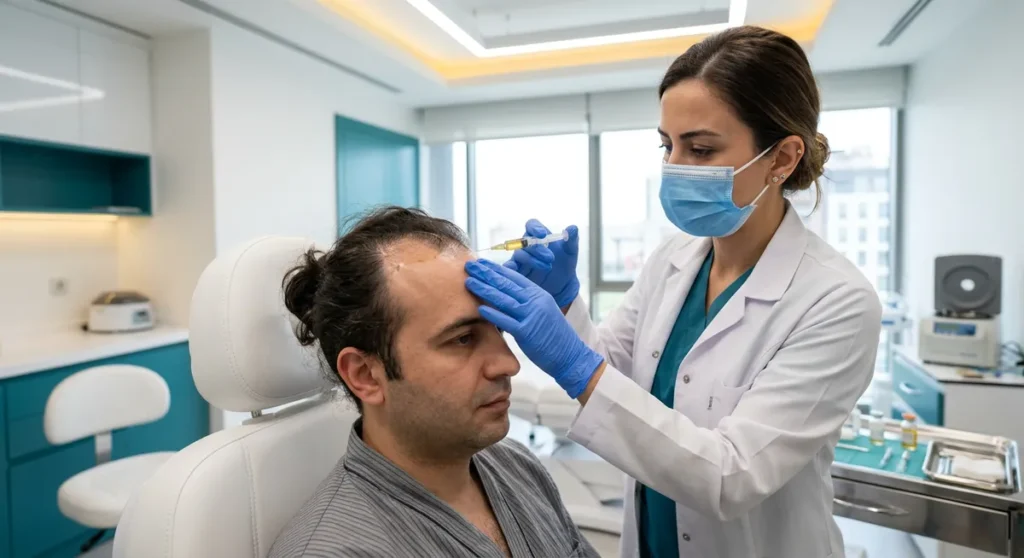
PRP uses your own blood to stimulate hair growth. A small blood draw (15–30ml), centrifugation to concentrate the platelets, and injection of the platelet-rich plasma into the scalp where hair is thinning. The growth factors in the plasma stimulate dormant follicles and improve blood supply to existing ones.
A 2019 systematic review in Dermatologic Surgery found that PRP therapy showed statistically significant improvement in hair density and thickness compared to placebo in patients with androgenetic alopecia. But let me be honest about what PRP can and can’t do.
PRP works for: – Early to moderate androgenetic alopecia (genetic hair loss) – Norwood stages 2–4 – Strengthening thinning hair that hasn’t died – Supporting hair transplant recovery and graft survival – Female pattern hair loss (diffuse thinning)
PRP does NOT work for: – Advanced baldness (Norwood 5–7) where follicles are dead – Complete bald patches with no active follicles – Hair loss caused by autoimmune conditions (alopecia areata has mixed results) – Replacing hair transplant surgery for significant loss
I won’t recommend PRP if you’re already at a stage where only a hair transplant will make a visible difference. PRP maintains and thickens existing hair. It doesn’t resurrect dead follicles.
What Does the PRP Process Look Like?
The entire procedure takes 30–45 minutes. No anesthesia required (though numbing cream is available for sensitive scalps).
Step 1. Blood draw from your arm – same as a routine blood test.
Step 2. Centrifuge processing (10–15 minutes) to separate platelet-rich plasma from the rest of your blood.
Step 3. Micro-injections across the thinning areas of your scalp. The needles are very fine. Most patients describe it as a series of small pinches.
Step 4. You leave immediately. No bandages, no downtime. You can wash your hair the next day.
Schedule: For optimal results, 3 sessions spaced 4 weeks apart, then maintenance sessions every 4–6 months. Results typically become visible after 2–3 months.
Can I Combine PRP with a Hair Transplant?
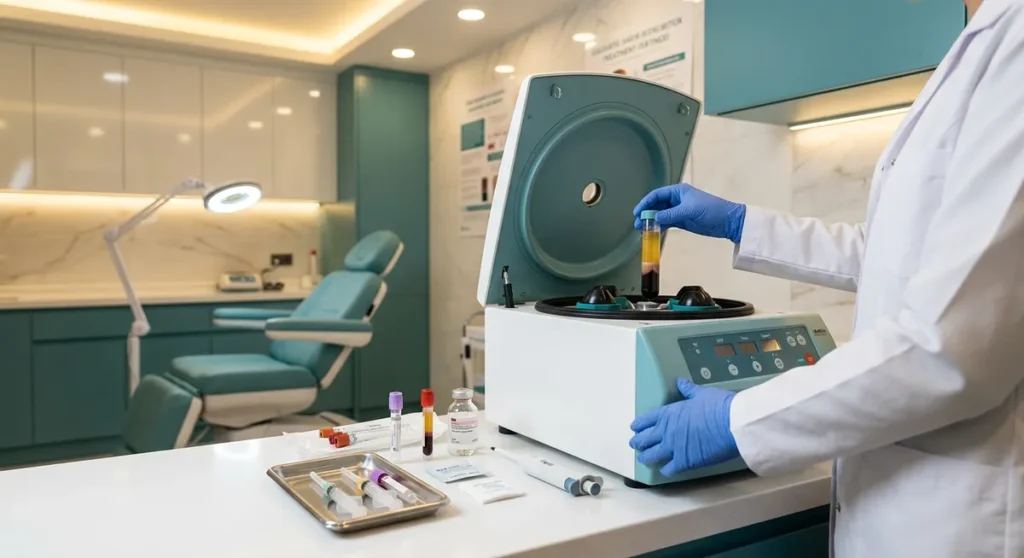
This is the most common way we use PRP. During an FUE hair transplant, PRP is applied directly to the transplanted area to:
- Improve blood supply to newly placed grafts
- Accelerate healing
- Potentially improve graft survival rate
- Strengthen existing thinning hair in the surrounding area
Many transplant clinics in Istanbul include PRP as part of the transplant package. Our partner clinics charge €100–200 as an add-on if it’s not already included.
Post-transplant PRP sessions (3–6 months after surgery) help strengthen both the transplanted and native hair. We recommend 2–3 sessions in the year following your transplant.
PRP also complements hair mesotherapy – the two can be alternated for patients who want comprehensive non-surgical hair loss management.
What Real Patients Ask Us (FAQ)
“Does PRP actually work or is it a gimmick?” The evidence is moderate. Multiple studies show improvement in hair density and thickness, but results vary between patients. It works best for early hair loss with still-active follicles. For advanced baldness, it’s not effective. We assess your stage of loss before recommending PRP.
“How many sessions do I need to see results?” Most patients notice improvement after 3 sessions (about 3 months in). Maintenance sessions every 4–6 months sustain the results. If you stop, hair gradually returns to its previous thinning trajectory.
“Is it painful?” Mild discomfort. The injections use fine needles and most patients tolerate it well. Numbing cream is available if you’re sensitive. The blood draw is the same as any standard blood test.
“Can women have PRP for hair loss?” Absolutely. Female pattern hair loss (diffuse thinning) responds well to PRP – often better than male pattern baldness because women typically have more active follicles to stimulate.
Ready to Get a Real Quote?
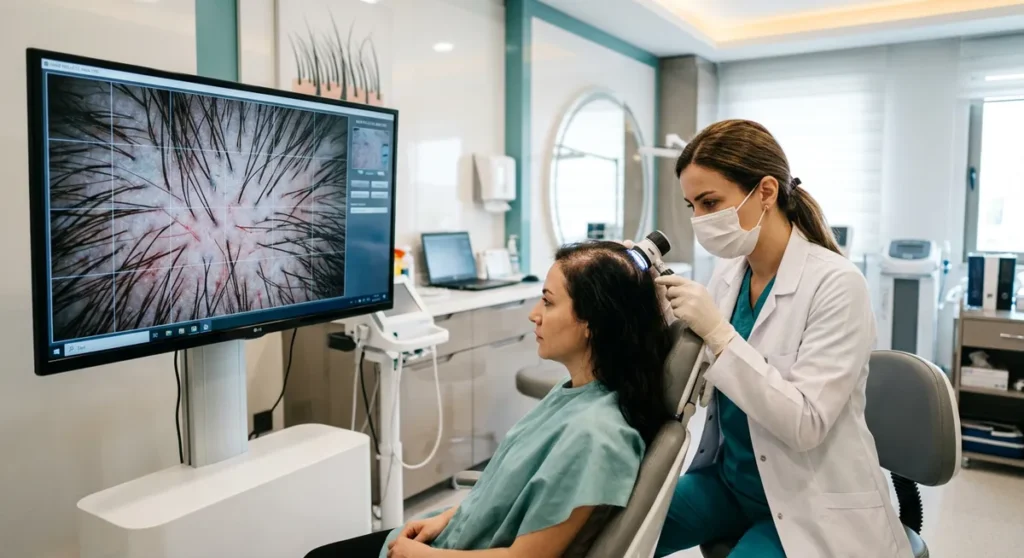
Send us photos of your hair on WhatsApp – top view, hairline, and areas of concern. We’ll assess your stage of loss and recommend whether PRP, mesotherapy, or a transplant is the right approach.
WhatsApp: +90 546 229 38 34
Or fill out the contact form.
How PRP Therapy Works at the Cellular Level
Platelet-rich plasma therapy for hair loss is grounded in well-established wound-healing biology. When blood is drawn and centrifuged, the heavier red blood cells separate from the lighter plasma fraction. A second spin further concentrates the platelets into a small volume, producing a preparation that contains three to five times the platelet concentration found in normal circulating blood.
When injected into the scalp, platelets release a cascade of growth factors — including platelet-derived growth factor (PDGF), vascular endothelial growth factor (VEGF), and insulin-like growth factor 1 (IGF-1). These signalling molecules act on dermal papilla cells at the base of hair follicles, stimulating cell proliferation, extending the anagen growth phase, and promoting angiogenesis — improving nutrient and oxygen delivery to miniaturised follicles. At Sante Clinic, a validated double-spin protocol is used alongside growth factor quantification to ensure each preparation meets a minimum therapeutic threshold before injection.
Who Are the Best Candidates for PRP Hair Therapy?
PRP therapy delivers its strongest results in patients who still have viable, living hair follicles that have become dormant or miniaturised rather than irreversibly destroyed. The ideal candidate is typically in the early to moderate stages of androgenetic alopecia — Norwood scale II through IV in men, Ludwig scale I through II in women — who has been experiencing progressive thinning for fewer than five years.
Patients with diffuse thinning caused by telogen effluvium also respond well, frequently showing noticeable reductions in daily shedding after two to three sessions. Certain medical conditions temporarily contraindicate PRP, including active scalp infections, platelet dysfunction disorders, or patients on anticoagulant therapy. A thorough pre-treatment blood panel and medical history review at consultation identify any contraindications before treatment is scheduled.
Combining PRP with Other Hair Restoration Treatments
PRP therapy is increasingly used as part of a multimodal approach rather than as a standalone intervention. In the context of hair transplantation, PRP is frequently administered intraoperatively — injected into the recipient area immediately before or after graft placement. Clinical evidence suggests this improves graft survival rates by enhancing the vascularity of the transplant bed.
For patients not yet ready for transplantation, combining PRP with daily topical minoxidil creates a synergistic programme: minoxidil prolongs the anagen phase and increases follicular size, while PRP provides direct growth factor stimulation at the follicular level. This combination approach is associated with superior outcomes compared to any single modality used in isolation. Hair mesotherapy and PRP can also be alternated in a sequenced schedule, providing ongoing nutritional support between PRP treatments.
Quick answers to questions
you may have
Your Most Important Questions, Answered
How many PRP sessions do I need for hair loss?
Initially, 4-6 sessions spaced 3-4 weeks apart create the foundation. Most patients see improvement after 3 sessions, with optimal results by session 6. Maintenance requires sessions every 3-4 months indefinitely. Some need more frequent treatment initially. Your response guides protocol adjustments.
Is PRP better than minoxidil for hair loss?
They work differently and complement each other. PRP stimulates follicles through growth factors while minoxidil increases blood flow. Studies show combination therapy superior to either alone. PRP has no daily application requirement but needs periodic sessions. Most benefit from using both approaches.
Can PRP regrow hair on completely bald areas?
No, PRP cannot create new follicles where none exist. It works by revitalizing existing follicles, even dormant ones. Areas bald for over 5 years unlikely to respond. PRP works best for thinning areas with miniaturized hairs still present. For bald areas, hair transplant is needed.
Are PRP results permanent?
Results last 12-18 months per treatment series, not permanent. Hair follicles need ongoing stimulation to maintain improvements. Regular maintenance sessions extend benefits indefinitely. Stopping treatment leads to gradual return of hair loss. Think of it like fitness – requires ongoing effort.
What's the success rate of PRP for hair loss?
Studies show 70-80% of patients experience decreased shedding and improved thickness. About 60% see visible regrowth. Results vary based on age, extent of loss, and protocol used. Best results in early loss with combination therapy. Individual response unpredictable until tried.
Can I wash my hair after PRP treatment?
No washing for 24-48 hours post-treatment to allow growth factors to work. After this, gentle washing with mild shampoo recommended. Avoid harsh chemicals, heat styling for one week. Scalp massage encouraged after 48 hours. Return to normal routine after one week.
Is PRP safe for everyone?
PRP is very safe as it uses your own blood. Contraindications include: blood disorders, active infections, cancer, anticoagulation therapy, and autoimmune conditions. Pregnancy and breastfeeding also contraindicated. Rare side effects include temporary pain, swelling, or headache. Infection risk minimal with sterile technique.