
Cat Eye Surgery in Turkey: Prices, Techniques, and What Nobody Tells You (2026)
Cat eye surgery in Turkey from €600. Canthoplasty, fox eye threads, blepharoplasty combo. Real prices March 2026. Natural results. Sante Clinic Istanbul.
Table of Contents
Get free quote
How Much Does Cat Eye Surgery Cost in Turkey in 2026?
Cat eye surgery (lateral canthoplasty) in Istanbul costs €2,000–3,500 as of March 2026, compared to €5,000–8,000 in the UK and $6,000–10,000 in the USA. Non-surgical fox eye thread lifts run €600–1,200 in Turkey versus €1,500–2,500 in the UK.
This procedure has exploded in popularity since 2022, largely driven by social media. The “fox eye” or “cat eye” look lifts the outer corner of the eye, creating an almond shape. But here’s what the TikTok videos don’t show: there’s a significant difference between a temporary thread lift and a permanent surgical canthoplasty, and not everyone is a good candidate for either.
| Procedure | Turkey (2026) | UK | Germany | USA |
|---|---|---|---|---|
| Lateral Canthoplasty | €2,000–3,500 | €5,000–8,000 | €4,000–7,000 | $6,000–10,000 |
| Fox Eye Threads (PDO/PLLA) | €600–1,200 | €1,500–2,500 | €1,200–2,000 | $2,000–3,500 |
| Cat Eye + Blepharoplasty | €3,000–4,500 | €7,000–12,000 | €6,000–10,000 | $9,000–15,000 |
What's the Difference Between Threads and Surgery?
Two fundamentally different approaches exist. Understanding the difference is critical before you book anything.
Fox eye thread lift. Non-surgical. Absorbable threads (PDO or PLLA) are inserted under the skin near the temples and eyebrow tail to lift the outer eye area. Takes 30–45 minutes, local anesthesia only, minimal downtime (2–3 days of swelling). Results last 12–18 months. The lift is subtle – if you’re expecting a dramatic change, threads will disappoint you.
Lateral canthoplasty. Surgical. The outer corner of the eye (lateral canthus) is repositioned to create a permanent upward tilt. Done under local anesthesia with sedation, takes 1–2 hours. Recovery: 7–10 days of visible swelling and bruising. Results are permanent. But it requires a surgeon with specific expertise in periorbital (around-the-eye) surgery – this is a delicate area with thin skin and proximity to the eye itself.
Let me be honest: the fox eye trend has brought a wave of patients requesting extreme lifts that don’t suit their facial anatomy. A good surgeon will tell you what looks natural on your face, not just give you what you saw on Instagram. Our surgeons in Istanbul assess your bone structure, skin thickness, and eye shape before recommending a technique.
What Does the Procedure Look Like?
For thread lifts: Day 1 – consultation, facial assessment, treatment plan. Day 2 – procedure (30–45 minutes), go back to your hotel with ice packs. Day 3–4 – mild swelling, can fly home. Total stay: 3–4 days.
For surgical canthoplasty: Day 1 – arrival, hotel check-in. Day 2 – pre-op consultation, markings, blood work. Day 3 – surgery (1–2 hours under local anesthesia with sedation). Day 4–7 – recovery at hotel, daily check-ins. Day 7–10 – suture removal, surgeon clears you to fly. Total stay: 10 days.
The surgical approach often combines well with upper blepharoplasty (eyelid surgery) for patients who have both hooded eyelids and downturned outer corners. Combining these adds about 45 minutes to surgery time and creates a more complete eye rejuvenation.
My partner coordinates all appointments and is present at consultations and follow-ups. For a procedure this visible – it’s your eyes – you want someone double-checking every detail.
Is Cat Eye Surgery Safe?
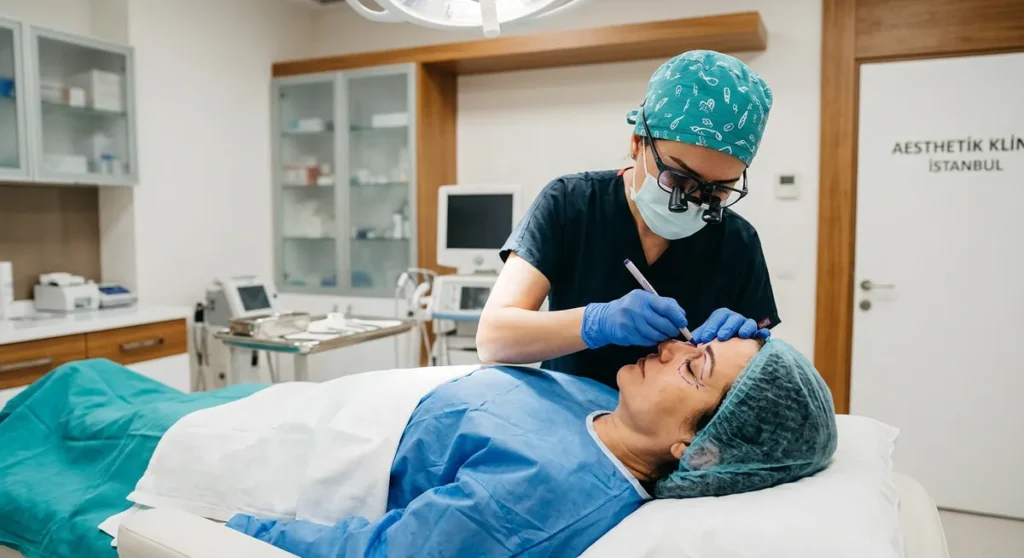
The area around the eye is one of the most anatomically sensitive zones for cosmetic surgery. Complications are uncommon with experienced surgeons, but the stakes are higher than with most procedures.
Risks specific to canthoplasty: – Asymmetry (the most common concern – can be subtle and may need minor touch-up) – Over-correction (eyes look too pulled, “surprised” appearance) – Under-correction (not enough lift to justify the surgery) – Dry eye symptoms (temporary, from altered eyelid tension) – Scarring at the outer corner (minimal with proper technique, fades well)
Risks specific to threads: – Threads becoming visible or palpable under thin skin – Asymmetric placement – Migration of threads – Infection (rare, under 1%)
The biggest risk with both approaches is choosing a surgeon who doesn’t specialize in periorbital work. A plastic surgeon who primarily does breast augmentation is not the right person for your canthoplasty. We specifically match cat eye patients with oculoplastic or facial plastic surgeons who focus on the eye area.
Can I Combine Cat Eye Surgery with Other Facial Procedures?
Yes. The most effective combinations:
- Cat eye + blepharoplasty – addresses both the outer corner and excess eyelid skin. The most requested combination.
- Cat eye + facelift – for patients who want overall facial rejuvenation with eye emphasis.
- Cat eye + forehead lift – lifts both the brow and outer eye simultaneously.
- Cat eye + endoscopic lift – a less invasive option for mild brow descent combined with the cat eye procedure.
If you’re unsure which combination suits your face, our Facial & Body Analysis consultation gives you a structured assessment.
What Real Patients Ask Us (FAQ)
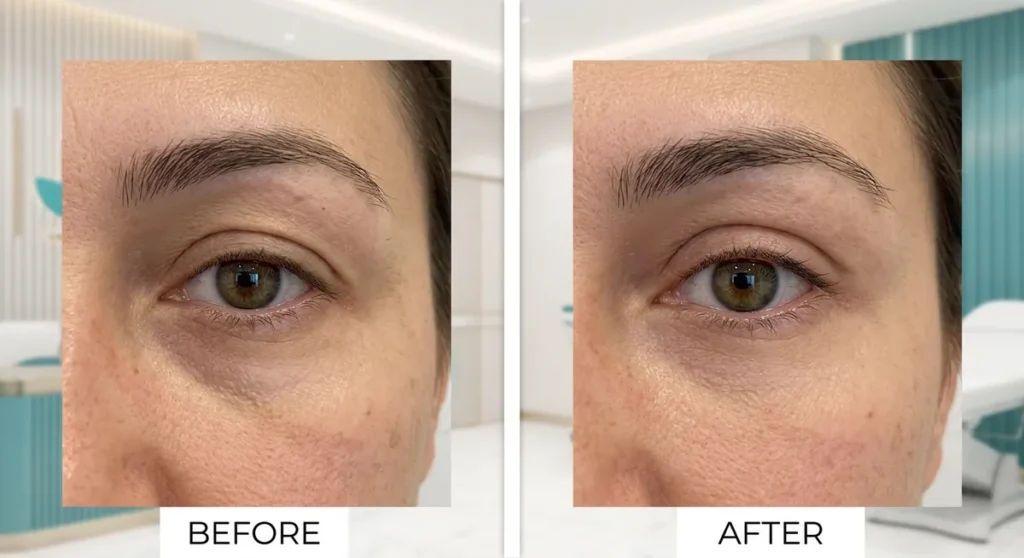
“Will it look natural?” It should. The goal is an almond-shaped eye with a subtle upward tilt – not a “pulled” look. If your surgeon is pushing for an extreme lift, consider that a red flag. Natural results come from conservative surgical planning.
“How long do results last?” Threads: 12–18 months. Surgical canthoplasty: permanent, though aging continues naturally. Some patients start with threads to “test” the look before committing to surgery. That’s a reasonable approach.
“Is the recovery visible?” For threads: 2–3 days of mild swelling, concealable with sunglasses. For surgery: 7–10 days of significant bruising around the eyes. Most patients can use makeup after suture removal to cover residual discoloration. Full healing: 3–4 weeks.
“Can I get both eyes exactly the same?” Perfect symmetry isn’t possible (your eyes aren’t perfectly symmetric to begin with). A skilled surgeon minimizes the difference, but slight asymmetry is normal and rarely noticeable to anyone but you.
Ready to Get a Real Quote?
Send us front-facing and side-profile photos on WhatsApp. Our surgeon will assess your eye anatomy and recommend the right approach – threads, surgery, or a combination with other procedures.
WhatsApp: +90 546 229 38 34
Or fill out the contact form and we’ll reply within 24 hours.
Cat Eye vs. Fox Eye: Understanding the Aesthetic Difference
The terms \”cat eye\” and \”fox eye\” are frequently used interchangeably in aesthetic medicine, but they describe subtly different outcomes. The fox eye aesthetic — popularised through social media — is characterised by a lateral elongation of the eye shape, with the outer corner pulled both upward and toward the temple. It is typically achieved through a combination of lateral canthopexy and temporal brow lifting.
The cat eye aesthetic emphasises a pronounced upward angulation at the outer corner without necessarily elongating the eye horizontally. This is primarily achieved through lateral canthoplasty, occasionally combined with upper eyelid reshaping. While both looks share the lateral lift component, the degree of tilt and the extent of horizontal pull distinguish the two outcomes. During your consultation at Sante Clinic, digital imaging is used to model both aesthetics on your own facial photographs, allowing an informed collaborative decision before any surgical plan is finalised.
What Happens to the Canthal Area: The Anatomy of Cat Eye Surgery
The lateral canthus — where the upper and lower eyelids meet at the outer corner — is anchored to the bony orbital rim via the lateral canthal tendon. This tendon determines the position, angle, and tightness of the outer eyelid margin. Cat eye surgery addresses this through lateral canthoplasty, in which the lateral canthal tendon is detached, repositioned at a higher point on the orbital rim, and resecured with permanent or long-lasting absorbable sutures.
This repositioning elevates the outer corner of the eye, increases the upward angulation of the palpebral fissure, and creates the impression of a more almond-shaped eye. Where significant lower eyelid laxity is present, a canthopexy — a tightening of the existing tendon without full detachment — may be sufficient. Meticulous surgical technique is essential in this area, as overcorrection or poor fixation can result in lower eyelid malposition, which is a preventable complication when the procedure is performed by a surgeon with specific expertise in periocular surgery.
Realistic Expectations: Results, Limitations, and Longevity
Cat eye surgery produces results that are visible and meaningful, but patients benefit from understanding what the procedure can and cannot achieve. The surgery permanently alters the structural position of the lateral canthus, providing a lasting change to the eye\’s angle and shape. Most patients notice an immediate difference following resolution of post-operative swelling, with final results apparent at six to eight weeks. Most patients return to computer work and non-strenuous daily activities within one to two weeks.
The longevity of results depends on the fixation technique used and individual tissue healing. Permanent suture fixation typically offers the most durable outcome, while some degree of relaxation over five to ten years is natural as tissues age. The procedure does not affect vision. The degree of upward angulation achievable is limited by the position of the bony orbital rim and the natural tension in the lower eyelid — a thorough preoperative assessment and honest discussion about the range of achievable improvement is a cornerstone of the consultation process at Sante Clinic.
Quick answers to questions
you may have
Your Most Important Questions, Answered
Is cat eye surgery permanent?
Surgical canthoplasty creates permanent changes to eye shape, typically lasting a lifetime. The lifted corner position is surgically fixed and won’t droop back. Natural aging continues, so some patients choose minor touch-ups after 10-15 years. Thread lifts are temporary, lasting 6-18 months. Many combine with skin rejuvenation for maintained youthfulness.
Will cat eye surgery look unnatural?
Not when performed correctly by experienced surgeons. Modern techniques create 2-4mm of lift – noticeable but not dramatic. Turkish surgeons’ high volumes mean perfected natural results. Most people think you look refreshed, not operated. Facial analysis ensures proportional enhancement.
Can cat eye surgery affect vision?
Properly performed cat eye surgery doesn’t affect vision. The procedure modifies external eye corners, not the eye itself. Temporary blurriness from swelling resolves quickly. Choosing oculoplastic surgeons minimizes any risk to eye function.
Can I combine cat eye surgery with other procedures?
Yes, combinations are common and recommended. Upper blepharoplasty, brow lifts, facelifts, and even rhinoplasty complement cat eye surgery. Combining saves money, requires single recovery, creates harmonious results. Many also schedule dental work or hair consultations during their stay.
How long is recovery for international patients?
Surgical canthoplasty requires 7-10 days in Turkey before flying. Thread lifts need only 2-3 days. Most swelling resolves by day 10 for public appearance. Many use recovery time for aesthetic consultations or light skin treatments.
What's the ideal age for cat eye surgery?
No perfect age – depends on anatomy and goals. Patients from 20s-60s benefit differently. Younger patients often choose enhancement; older patients need correction. Thread lifts good for testing the look. Facial analysis helps determine optimal timing and technique.
Can men have cat eye surgery?
Absolutely. Male cat eye surgery requires subtle approach maintaining masculine appearance. Turkish surgeons understand gender-specific aesthetics. Results create alert, youthful look without feminization. Often combined with hair restoration or facial procedures for complete male rejuvenation.