
Tooth Extraction in Turkey: Prices, Process, and What Nobody Tells You (2026)
Tooth extraction in Turkey from €50. Wisdom teeth, surgical extraction, same-visit implants. Real prices March 2026. All-inclusive packages. Sante Clinic.
Table of Contents
Get free quote
How Much Does Tooth Extraction Cost in Turkey in 2026?
A simple tooth extraction in Istanbul costs €50–100 as of March 2026, compared to €150–300 in the UK and $150–400 in the USA. Surgical wisdom tooth removal runs €200–400 in Turkey versus €600–1,500 in the UK. Full-mouth extractions (for patients transitioning to implants or dentures) cost €800–1,500 including all four quadrants.
Like teeth whitening, a single extraction probably isn’t worth an international trip on its own. The savings on one extraction are €100–200, which doesn’t cover airfare.
But most of our extraction patients aren’t coming for extractions alone. They need teeth removed as the first step toward dental implants or as part of a larger dental treatment plan. Extraction, bone grafting, and implant placement can often happen in the same visit – saving you months compared to doing it step by step at home.
| Procedure | Turkey (2026) | UK | Germany | USA |
|---|---|---|---|---|
| Simple Extraction | €50–100 | €150–300 | €100–250 | $150–400 |
| Surgical Extraction | €100–200 | €300–600 | €250–500 | $300–700 |
| Wisdom Tooth (impacted) | €200–400 | €600–1,500 | €500–1,200 | $500–1,500 |
| All 4 Wisdom Teeth | €600–1,200 | €2,000–4,000 | €1,500–3,500 | $1,500–4,000 |
What Types of Tooth Extraction Are Available?
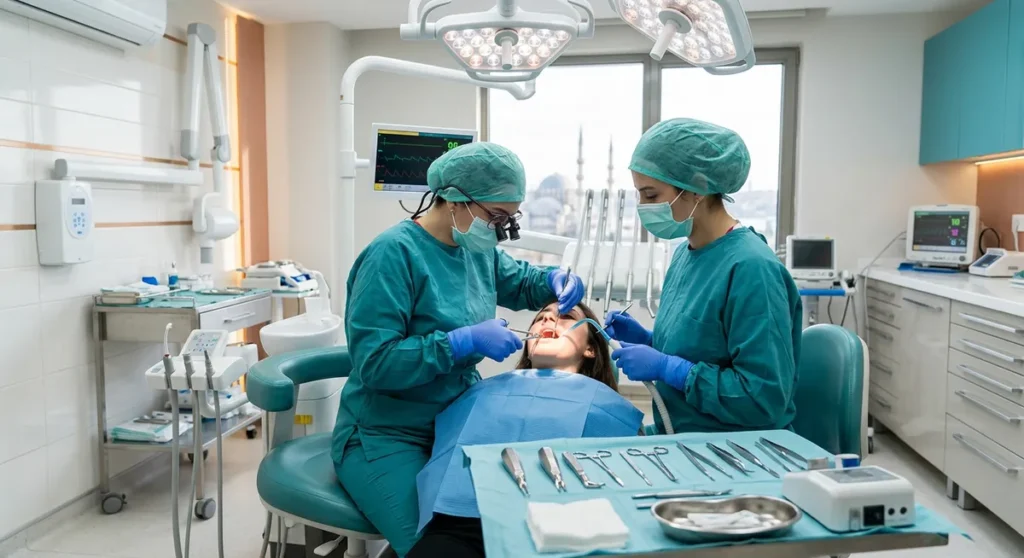
Three main extraction types are performed at our partner clinics, and the method depends on the tooth’s position, condition, and root structure.
Simple extraction. For visible teeth that are loose or badly decayed. Local anesthesia, forceps, done in 10–20 minutes. Minimal recovery. You can eat soft food within a few hours.
Surgical extraction. For teeth that have broken below the gum line or have curved roots. Requires a small incision in the gum and sometimes bone removal. Takes 20–45 minutes under local anesthesia (sedation available). This is the standard approach for most impacted wisdom teeth.
Atraumatic extraction. A specialized technique where the tooth is carefully loosened with periotomes rather than forceps. Preserves the bone socket for future implant placement. This is what our dentists use when an immediate implant is planned – the less bone damage during extraction, the better the implant foundation.
One decision your dentist will discuss: whether to place the implant immediately after extraction or wait 2–3 months for the socket to heal. Immediate placement works when there’s enough bone and no active infection. Delayed placement is safer when bone grafting is needed. Your surgeon decides based on your 3D CT scan, not on a generic protocol.
What Does the Extraction Process Look Like?
For most patients, extraction is the quickest and least dramatic part of their dental trip. Here’s what to expect.
Before the procedure: Your dentist reviews your panoramic X-ray or CT scan. The extraction plan is confirmed – which teeth, which order, and whether bone preservation grafting is needed. You’ll know exactly what’s happening before you sit down.
During: Local anesthesia (you’re awake but feel no pain). For anxious patients, conscious sedation is available at our partner clinics for an additional €100–200. The extraction itself takes 10–45 minutes depending on complexity. You’ll feel pressure, not pain.
After: Gauze for 30 minutes, ice pack on your jaw. Prescriptions for antibiotics (if needed) and painkillers. Soft food for 24–48 hours. No hot drinks, no straws, no smoking. The socket forms a blood clot that protects the healing bone – disturbing it causes dry socket, which is the one complication you actually want to avoid.
Recovery: Simple extractions – you’re eating normally in 2–3 days. Surgical/wisdom teeth – soft food for 5–7 days, swelling peaks at day 2–3 then subsides. Most patients are comfortable to fly 48 hours after a simple extraction, 3–5 days after surgical.
My partner checks in daily during your Istanbul stay and coordinates with the dentist if anything feels off. After you fly home, you have direct WhatsApp access to the dental team for any concerns.
Can I Get Extractions and Implants in the Same Visit?
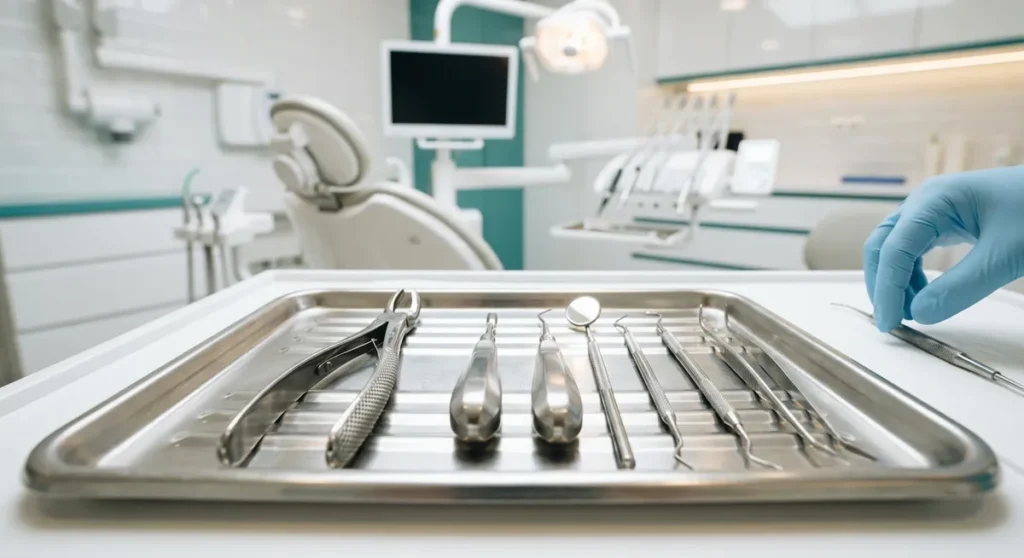
Yes, in many cases. This is actually the most common scenario we coordinate – extraction followed by immediate implant placement.
The workflow: your dentist extracts the damaged tooth, cleans the socket, and places the implant directly into the extraction site. A temporary crown or healing cap goes on top. You leave with a functional tooth where there was a damaged one. The implant integrates with the bone over 3–4 months, then you return for the permanent crown.
This doesn’t work for every case. Active infection around the tooth root, insufficient bone density, or severely curved roots may require a staged approach – extract first, graft bone, wait 3–4 months for healing, then return for implant placement.
Your dentist makes this call based on the CT scan, not based on what’s faster or more convenient. We’d rather add a month to your timeline than risk an implant failing because it was placed too soon.
For patients needing full-mouth extractions transitioning to All-on-4 or All-on-6 implant-supported dentures, all extractions and implant placements happen in a single surgery. This is a longer procedure (3–5 hours) but means you leave with fixed temporary teeth the same day.
What Can Go Wrong – and How Do We Handle It?
Tooth extraction is one of the safest dental procedures. Complications are uncommon but worth knowing about.
Dry socket (2–5% of cases, higher for wisdom teeth). Occurs when the blood clot dislodges from the extraction site, exposing bone. Very painful but treatable – the dentist places a medicated dressing. Prevention: don’t smoke, don’t use straws, don’t spit forcefully for 48 hours after extraction.
Infection (less than 2%). Swelling, fever, increased pain after day 3. Treated with antibiotics. Risk is higher in patients with diabetes or compromised immune systems.
Nerve damage (rare, mainly lower wisdom teeth). Temporary numbness or tingling in the lower lip or tongue. Occurs in roughly 1–2% of lower wisdom tooth extractions. Usually resolves within weeks. Permanent damage is extremely rare with experienced oral surgeons using 3D CT planning.
If a complication occurs while you’re in Istanbul, the dentist handles it immediately. If something develops after you fly home, send us photos via WhatsApp and we arrange a video consultation within 24 hours.
What Real Patients Ask Us (FAQ)
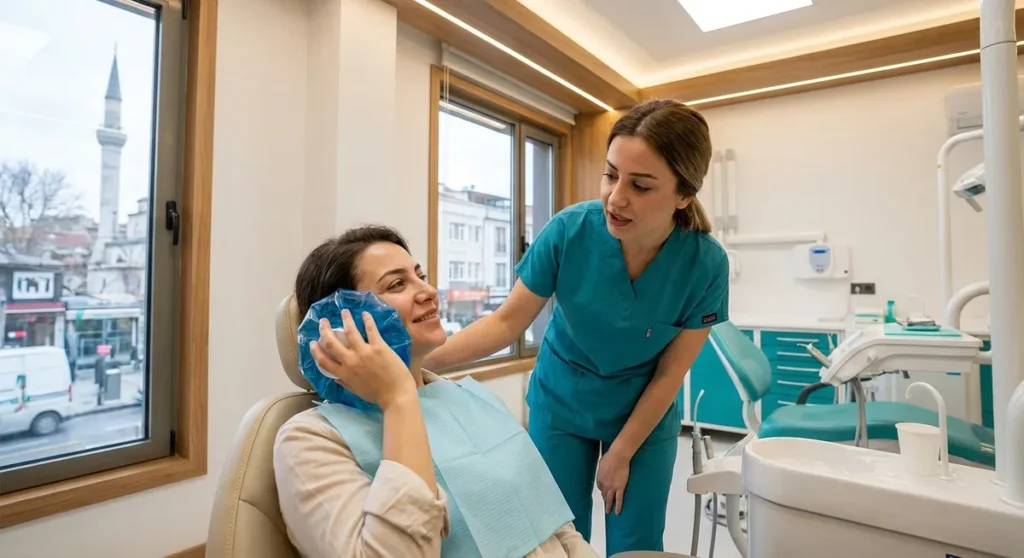
“How painful is tooth extraction?” Less than you expect. With local anesthesia, you feel pressure but no pain. Post-extraction soreness is mild for simple extractions (ibuprofen handles it) and moderate for surgical/wisdom teeth (prescription painkillers for 2–3 days).
“Can I fly the same day as an extraction?” For a simple extraction, yes – though we recommend waiting 24 hours. For surgical extractions or multiple teeth, wait 3–5 days. Cabin pressure changes can increase bleeding risk if the socket hasn’t stabilized.
“Do I need all my wisdom teeth removed?” Not necessarily. If they’ve erupted normally, aren’t causing problems, and can be cleaned properly, they can stay. Only impacted, partially erupted, or decay-prone wisdom teeth need removal. Your dentist will assess with an X-ray.
“Should I get the tooth pulled or try to save it with a root canal?” It depends on the tooth’s condition. A root canal saves the tooth if the structure is mostly intact. If the tooth is severely cracked, has a failed previous root canal, or the decay extends below the bone line, extraction plus an implant gives a better long-term result. Your dentist will recommend based on prognosis, not profit.
Ready to Get a Real Quote?
Send us your X-ray or photos on WhatsApp. If extraction is part of a larger treatment plan (implants, dentures, or full rehabilitation), we’ll coordinate everything into a single treatment timeline.
WhatsApp: +90 545 910 44 03
Or fill out the contact form and we’ll reply within 24 hours.
Quick answers to questions
you may have
Your Most Important Questions, Answered
Is it safe to have teeth extracted abroad?
Absolutely. Turkish dental clinics follow strict international sterilization and safety protocols. The technology (3D imaging, surgical equipment) often exceeds general UK practices. Our partner oral surgeons perform thousands of extractions annually with complication rates below international averages. You receive the same medications plus 24/7 support during recovery.
How painful is tooth extraction in Turkey?
With modern techniques and proper anesthesia, you feel only pressure during extraction, no pain. Turkish dentists are known for gentle injection techniques. Post-operative pain is typically mild, well-controlled with medication. Most patients report less discomfort than expected, especially compared to chronic pain from problem teeth.
Can I fly home after wisdom tooth removal?
Yes, flying is generally safe 48-72 hours after wisdom tooth extraction. Cabin pressure concerns are largely mythical for extractions. Your surgeon provides clearance based on healing progress. We recommend 4-5 days stay for complex wisdom teeth to ensure smooth initial recovery before travel.
What if I develop dry socket after returning home?
Dry socket, while uncomfortable, is treatable by any dentist. Turkish surgeons provide detailed records for local dentist if needed. Risk is actually lower with PRF protocols used in Turkey. If dry socket develops, local treatment is simple – medicated dressing changes. Turkish clinic remains available for consultation.
Should I extract teeth before getting implants or simultaneously?
Depends on infection status and bone condition. Active infection requires staged treatment (extract, heal, implant). Without infection and with good bone, immediate implant placement saves time and preserves bone. Your surgeon decides based on 3D imaging. Turkish clinics excel at both approaches.
How many teeth can be extracted in one visit?
No absolute limit – full mouth extractions are routine. Limiting factors are procedure duration and comfort. With sedation, 20+ teeth can be removed safely. Surgeon considers health, anxiety level, and recovery. Sometimes staging (uppers then lowers) is more comfortable. Your safety drives decisions.
Will the language barrier be a problem?
Not at all. Partner clinics provide written instructions in English, care coordinators available 24/7 via WhatsApp. Istanbul medical tourism areas have English-speaking hotel staff. Pharmacies near clinics familiar with international patients. Constant support throughout recovery guaranteed.