Losing most or all of your teeth changes everything—how you eat, how you speak, how you feel about yourself. If you’ve been researching ways to restore your smile permanently, you’ve likely come across full mouth dental implants as a solution. And if cost has been a barrier, Turkey has probably appeared on your radar too.
Here’s what you need to know: full mouth dental implants in Turkey offer the same quality materials and techniques used in UK and European clinics, but at a fraction of the price. In this detailed guide, we’ll walk you through exactly what the procedure involves, what it costs, how long it takes, and how to ensure you’re choosing a clinic you can trust. By the end, you’ll have everything you need to make an informed decision about your smile.
Key Takeaways
- Cost: Full mouth dental implants in Turkey range from €5,500 to €14,000 (£4,700–£12,000) for both arches, compared to €20,000–€40,000+ in the UK and EU.
- Procedure Time: Treatment typically requires two visits to Turkey over 3–6 months, with 5–10 days per visit.
- Implant Systems: Reputable Turkish clinics use internationally recognised brands like Straumann, Nobel Biocare, and Osstem—the same implants used in Western Europe.
- Success Rate: JCI-accredited clinics in Turkey report implant success rates of 95–98%, comparable to UK standards.
- Warranty: Most quality clinics offer a lifetime warranty on implants and 5–10 years on prosthetic teeth.
What Are Full Mouth Dental Implants?
Full mouth dental implants are a permanent solution for people who have lost most or all of their teeth in one or both jaws. Unlike traditional dentures that sit on your gums and can slip or cause discomfort, implant-supported teeth are fixed securely to titanium posts surgically placed in your jawbone.
Think of it this way: the titanium implants act as artificial tooth roots. Over time, your jawbone fuses with these implants through a natural process called osseointegration, creating an incredibly stable foundation. A custom-made bridge of prosthetic teeth is then attached to these implants, giving you a full set of teeth that look, feel, and function like natural ones.
The result? You can eat the foods you love, speak clearly, and smile with confidence—without worrying about your teeth moving or falling out.
Who Is a Good Candidate?
Full mouth implants may be right for you if:
- You’re missing all or most of your teeth in one or both jaws
- Your current dentures are uncomfortable, loose, or limiting what you can eat
- You have enough jawbone density to support implants (or are willing to undergo bone grafting if needed)
- You’re in generally good health and don’t have uncontrolled conditions like diabetes
- You’re committed to good oral hygiene after treatment
All-on-4 vs. All-on-6: Which Is Right for You?
When researching full mouth implants, you’ll encounter two main approaches: All-on-4 and All-on-6. Both provide a complete arch of fixed teeth, but they differ in the number of implants used and which situations they’re best suited for.
All-on-4 Dental Implants
The All-on-4 technique uses four strategically placed implants per jaw to support a full arch of teeth. Two implants are placed vertically at the front of the mouth, while the other two are angled at 30–45 degrees toward the back. This angled placement allows the implants to anchor into denser bone, often eliminating the need for bone grafting.
Best for: Patients with moderate bone loss who want to avoid additional procedures.
All-on-6 Dental Implants
All-on-6 uses six implants per jaw, providing additional support and stability. The extra implants distribute biting force more evenly, which can be particularly beneficial for the upper jaw where bone density is typically lower.
Best for: Patients with adequate bone density who want maximum stability, or those with stronger bite forces.
Comparison Table: All-on-4 vs. All-on-6
| Factor | All-on-4 | All-on-6 |
|---|---|---|
| Number of implants | 4 per arch | 6 per arch |
| Bone grafting needed? | Rarely | Sometimes |
| Stability | Very good | Excellent |
| Cost (Turkey) | €2,800–€5,500 per arch | €3,500–€7,000 per arch |
| Best for | Moderate bone loss | Maximum stability |
| Recovery time | Slightly faster | Similar |
Insider Tip: Your dentist will recommend the best option based on your 3D CT scan results. Don’t assume that more implants are always better—what matters most is matching the treatment to your specific bone structure and needs.
Full Mouth Dental Implants Cost: Turkey vs. UK & EU
Let’s address the question on everyone’s mind: how much do full mouth dental implants actually cost, and how does Turkey compare to getting treatment at home?
Cost Comparison Table
| Treatment | Turkey (€) | Turkey (£) | UK (£) | EU Average (€) |
|---|---|---|---|---|
| Single implant (with crown) | €400–€800 | £350–£700 | £2,000–£3,500 | €1,500–€3,000 |
| All-on-4 (per arch) | €2,800–€5,500 | £2,400–£4,700 | £12,000–£17,000 | €10,000–€18,000 |
| All-on-6 (per arch) | €3,500–€7,000 | £3,000–£6,000 | £15,000–£22,000 | €14,000–€25,000 |
| Full mouth (both arches) | €5,500–€14,000 | £4,700–£12,000 | £25,000–£40,000+ | €20,000–€40,000+ |
Prices reflect 2026 market data. Actual costs vary based on implant brand, prosthetic material, and individual case complexity.
What’s Typically Included in Turkish Package Prices
Quality Turkish clinics offer all-inclusive packages that cover far more than just the surgical procedure. At Santé Clinic, our partner clinics’ packages typically include:
- Initial consultation and 3D CT scan
- All dental implants and abutments
- Temporary teeth (worn during healing)
- Permanent prosthetic bridge (porcelain or zirconia)
- Any necessary tooth extractions
- Medications and aftercare products
- Hotel accommodation (4–5 star)
- VIP airport transfers
- 24/7 patient coordinator support
This detailed approach means fewer surprises and a clearer picture of your total investment from the start.

Why Are Dental Implants Cheaper in Turkey?
When patients see these price differences, the first question is often: “Is there a catch?” It’s a fair concern, and one we want to address directly.
The lower costs in Turkey are not about cutting corners on quality. They reflect genuine economic differences:
Lower operating costs. Rent, utilities, and wages in Turkey are significantly lower than in Western Europe. A clinic in Istanbul or Antalya simply doesn’t face the same overhead as one in London or Munich.
Government support for medical tourism. Turkey has invested heavily in healthcare infrastructure and training to become a global hub for medical tourism. This has created a competitive market that benefits patients.
High patient volume. Turkish dental clinics see a high volume of international patients, allowing them to offer competitive pricing while maintaining quality standards. When you perform hundreds of implant procedures each year, efficiency improves and costs per patient decrease.
Favourable exchange rates. The Turkish lira’s value relative to the euro and pound makes services more affordable for European patients without reducing what Turkish professionals earn.
What you’re not getting is inferior care. The same Straumann implant placed in a JCI-accredited clinic in Istanbul is identical to one placed in a private practice in London—it just costs less because of where it’s being placed.
The Full Mouth Implant Process: Step by Step
Understanding what happens at each stage helps reduce anxiety and ensures you know exactly what to expect. Here’s how the process typically unfolds:
Before You Travel: Online Consultation
Step 1: Initial Assessment
your experience begins with a virtual consultation. You’ll share photos of your teeth and, ideally, a panoramic X-ray or 3D scan from your local dentist. Our care coordinators will review your case with our partner clinics’ dental specialists and provide a preliminary treatment plan with transparent pricing.
Step 2: Treatment Plan & Quote
Based on your assessment, you’ll receive a full treatment plan outlining: the recommended procedure (All-on-4, All-on-6, or traditional implants), the implant brand to be used, the prosthetic material options, the total cost breakdown, and the expected timeline.
Insider Tip: Be cautious of any clinic that provides a fixed price without reviewing your scans first. Every mouth is different, and a responsible clinic will always caveat that the final plan may be adjusted after an in-person examination.
First Visit to Turkey (5–7 Days)
Step 3: detailed Examination
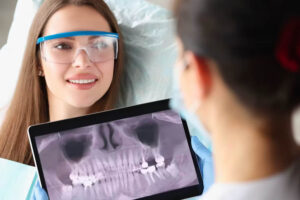
Upon arrival, you’ll have a thorough examination including new 3D CT scans, allowing your dentist to plan implant placement with millimetre precision. This is also when any adjustments to your treatment plan are discussed.
Step 4: Preparation
If you have remaining teeth that need extraction, this is typically done on the same day or the day before implant surgery. Any preparatory procedures like bone grafting or sinus lifts are also performed if needed.
Step 5: Implant Surgery
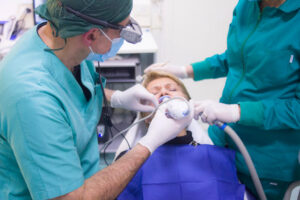
The implants are placed under local anaesthesia (or sedation if preferred). The procedure itself takes 1–3 hours per arch. You won’t feel pain during surgery—just pressure and vibration.
Step 6: Temporary Teeth
In most cases, a temporary fixed bridge is attached to your implants the same day or within 24–48 hours. This means you won’t leave the clinic without teeth. These temporary teeth allow you to eat soft foods and smile confidently while your implants heal.
Healing Period (3–6 Months)
Step 7: Osseointegration
This is the crucial phase where your jawbone fuses with the titanium implants. During this time, you’ll be back home, eating a soft-food diet and maintaining good oral hygiene. You’ll have remote check-ins with your dental team to monitor progress.
Second Visit to Turkey (5–7 Days)
Step 8: Final Impressions
Once healing is complete, you’ll return for the final phase. New digital scans and impressions are taken to create your permanent prosthetic teeth.
Step 9: Permanent Teeth Fitting
Your custom-made permanent bridge is carefully fitted, adjusted for comfort and bite alignment, and secured to your implants. This is the moment everything comes together—you’ll leave with a complete, natural-looking smile.
Step 10: Aftercare Guidance
Before you fly home, you’ll receive detailed instructions on caring for your new teeth, along with all necessary documentation for any follow-up care with your local dentist.
Implant Brands Used in Turkey: What You Should Know
The implant brand matters. It affects long-term success rates, the availability of replacement parts should you ever need them, and the confidence you can have in your treatment.
Reputable Turkish clinics use the same internationally recognised implant systems you’d find in Western Europe:
Premium Tier
Straumann (Switzerland): Considered the gold standard in implantology. Their SLActive surface technology accelerates bone healing, and their Roxolid material (titanium-zirconium alloy) offers superior strength. Success rates exceed 98% at 10 years. Straumann offers a lifetime warranty on implants.
Nobel Biocare (Sweden/Switzerland): A pioneer in implant dentistry and inventor of the All-on-4 concept. Known for their TiUnite surface that enhances osseointegration. Extensive research backing with success rates above 95% at 10 years.
High-Quality Tier
Osstem (South Korea): One of the world’s most-used implant systems, combining excellent quality with more accessible pricing. Strong clinical outcomes and increasingly chosen by European dentists as well.
MegaGen (South Korea): Known for innovative designs like the AnyRidge implant, which achieves excellent stability even in softer bone. A solid mid-range option with good long-term data.
Questions to Ask Your Clinic
- Which implant brand will be used, and is this specified in writing?
- Does the implant come with an authenticity certificate and serial number?
- What warranty is provided on the implants and prosthetics?
- Can replacement parts be sourced in my home country if needed?
Insider Tip: At Santé Clinic, we only partner with clinics that use verified, internationally recognised implant brands. You’ll receive full documentation including the implant’s serial number, which can be verified directly with the manufacturer.
Is It Safe to Get Dental Implants in Turkey?
This is the most important question, and it deserves an honest answer.
The short answer: Yes, it can be completely safe—but only if you choose the right clinic.
Turkey’s dental tourism industry has grown rapidly, and while this has brought many excellent clinics to international attention, it has also attracted some that prioritise volume over quality. Your job is to distinguish between them.
What Makes a Clinic Safe
Accreditation matters. JCI (Joint Commission International) accreditation is the gold standard. A JCI-accredited clinic has been independently audited against rigorous international standards covering patient safety, infection control, staff qualifications, and quality management. ISO certifications (9001, 13485) and Turkish Ministry of Health approval are also important indicators.
Dentist qualifications. Turkish dentists complete a minimum of five years of university education, often followed by specialist training. Many have additional qualifications from European or American institutions. Look for dentists who are members of international bodies like the International Congress of Oral Implantologists (ICOI) or European Association for Osseointegration (EAO).
Technology and protocols. Modern implant dentistry relies on 3D CT scanning, digital treatment planning, and guided surgery for precise implant placement. Sterilisation protocols should follow European standards, with autoclaved instruments and single-use materials where appropriate.
Success rates. JCI-accredited clinics in Turkey report implant success rates of 95–98%, which is comparable to—and sometimes exceeds—UK standards. A 2017 systematic review published in the International Journal of Oral and Maxillofacial Surgery found a cumulative survival rate of 93% across Turkish implant studies, with higher rates in newer, better-equipped facilities.
Red Flags to Avoid
- Prices that seem too good to be true
- Inability to specify which implant brand will be used
- No clear information about dentist qualifications
- Pressure to book immediately without a proper consultation
- No written treatment plan or warranty documentation
How to Choose the Right Clinic
With hundreds of dental clinics in Turkey marketing to international patients, how do you find one you can trust? Here’s a practical checklist:
Your Clinic Selection Checklist
✅ Verify accreditations. Check JCI accreditation directly on the JCI website, not just on the clinic’s own claims. Look for ISO certifications and Ministry of Health approval.
✅ Research the dentist. Look up their qualifications, years of experience, and any specialist training. Check if they’re members of recognised professional organisations.
✅ Request a video consultation. A reputable clinic will offer a thorough virtual consultation before you commit. This is your opportunity to assess their professionalism and ask detailed questions.
✅ Ask about implant brands. Get written confirmation of which brand will be used. Verify it’s an internationally recognised system.
✅ Review patient testimonials. Look for reviews from patients in your country on independent platforms like Google, Trustpilot, or dedicated medical tourism forums.
✅ Understand the full cost. Request a detailed breakdown. Ask specifically what’s included and what might incur additional charges.
✅ Check aftercare provisions. How will follow-up be handled once you’re home? Does the clinic coordinate with dentists in your country? What warranty is provided?
Why Work with Santé Clinic
We’ve done this research for you. Santé Clinic partners only with carefully vetted clinics that meet our strict criteria for accreditation, dentist qualifications, and patient care standards. We act as your advocate throughout the process—coordinating your treatment, arranging accommodation and transfers, and ensuring clear communication at every step. Learn more about how we work or explore our dental treatment packages.